How to Start a Profitable Micro‑Business Selling Compost From Your Apartment Countertop Composter: A Step‑by‑Step Guide
Introduction
This guide explains how one can transform everyday kitchen waste into a marketable product while operating from a modest apartment space. The reader will learn the essential equipment, the systematic process of composting, quality control methods, and practical marketing techniques. By following the steps, one can create a revenue stream that also contributes to environmental sustainability. The information is presented in a professional tone that balances accessibility with depth for an intermediate audience.
What You'll Need
- A countertop compost bin for daily collection of organic scraps.
- A larger tumbling composter for accelerating decomposition.
- Protective garden gloves for handling material safely.
- Reusable compostable liners or bags.
- Basic packaging supplies such as small biodegradable bags and labels.
Step 1: Choose the Right Composting System
Selecting an appropriate composting system is the foundation of a successful micro‑business. For an apartment setting, a compact countertop bin provides immediate collection while a larger outdoor tumbler accelerates the breakdown process. The VIVOSUN Tumbling Composter offers a 43‑gallon capacity, dual‑chamber design, and 360° tumbling mechanism that eliminates the need for manual mixing. Its premium metal frame and high‑quality PP plastic ensure durability, and the included garden gloves protect the user's hands during assembly and maintenance. Priced at $59.99 with a rating of 4.3 out of 5 from 9,870 reviews, it provides excellent value for an aspiring entrepreneur.
For daily kitchen collection, the Epica Kitchen Compost Bin is a 1.3‑gallon stainless steel container that features an airtight lid and replaceable charcoal filter to control odors. At $29.98 and a 4.7 rating from 20,819 reviews, it combines aesthetic appeal with functional performance, making it suitable for visible countertop placement.
Alternative countertop options include the Utopia Kitchen Compost Bin ($24.35, 4.5 rating) and the OXO Good Grips Compost Bin ($30.00, 4.6 rating). Each provides a sleek stainless‑steel design, charcoal filtration, and smooth interiors for easy cleaning. Selecting one of these bins ensures that kitchen odors remain minimal while the user collects material for the larger tumbler.
Finally, the simplehuman Compost Caddy offers a magnetic dock that attaches to a compatible simplehuman trash can, freeing countertop space. Priced at $49.99 with a 4.4 rating, it includes a soft‑seal lid and removable inner bucket, which simplifies emptying into the outdoor tumbler.
Step 2: Set Up the Composting Environment
After acquiring the equipment, one should allocate a dedicated area near a window or balcony where the tumbling composter can receive sunlight and airflow. The VIVOSUN unit requires assembly; the included Phillips screwdriver and self‑tightening nuts streamline the process, and the extra screws provided reduce the risk of missing hardware. One should place the composter on a stable surface, preferably a concrete pad or heavy‑duty mat, to prevent tipping during rotation.
Inside the apartment, the countertop bin should sit on a heat‑resistant mat to protect the countertop from condensation. The Epica and OXO bins both feature smooth interiors that resist staining, which simplifies routine cleaning. One may line the bin with a compostable bag to facilitate transfer of material into the larger tumbler without creating mess.
Protective garden gloves, included with the VIVOSUN composter, are essential when handling partially decomposed material. The gloves are waterproof and equipped with ABS plastic claws, allowing the user to dig, turn, and separate compost without damaging skin. Wearing gloves also prevents the transfer of pathogens from raw food waste to the hands.
Maintaining proper aeration is critical. The VIVOSUN’s eight‑panel fins and ventilation holes promote oxygen flow, which accelerates microbial activity. One should ensure that the tumbler is positioned where wind can pass through the vents but not where it is exposed to extreme rain.
Step 3: Collect and Process Kitchen Scraps
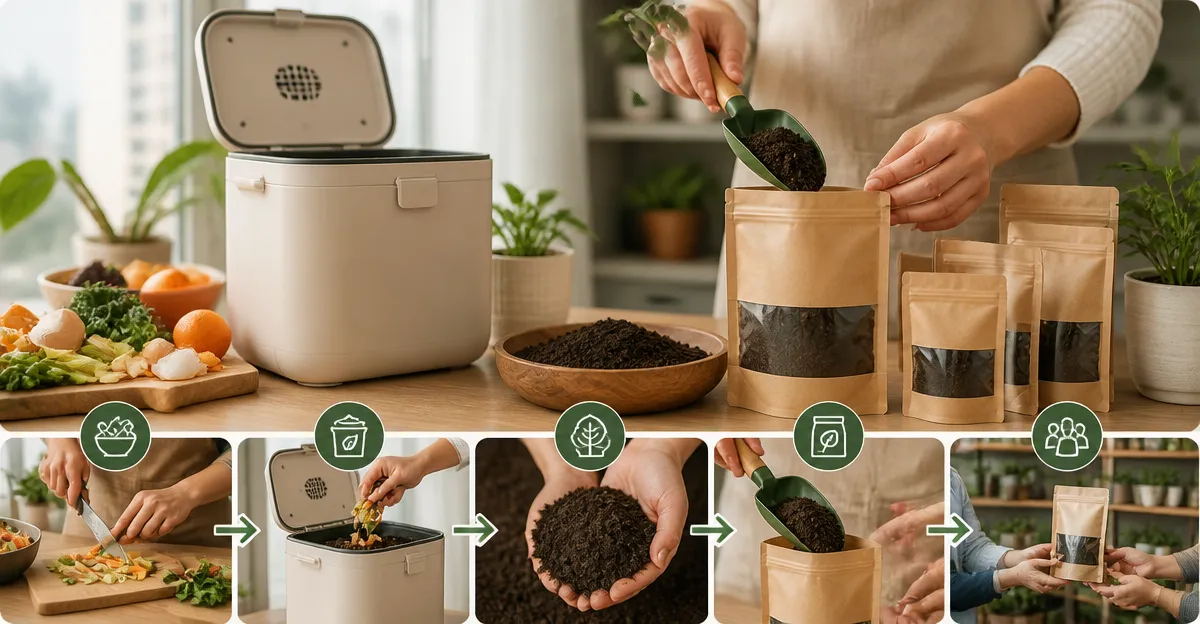
Begin by separating organic waste from non‑compostable items at the point of generation. The countertop bin serves as the primary collection point; one should deposit fruit peels, vegetable trimmings, coffee grounds, and eggshells into the bin immediately after preparation. The charcoal filter in the Epica or OXO bins neutralizes odors, allowing the user to keep the bin open during cooking without discomfort.
When the bin reaches approximately three‑quarters capacity, transfer the contents to the VIVOSUN tumbler. The dual‑chamber design permits continuous operation: while one chamber finishes the decomposition cycle, the other chamber can receive fresh material. This arrangement ensures an uninterrupted supply of mature compost for sale.
During transfer, one should add a thin layer of brown material such as shredded newspaper or dry leaves to balance the carbon‑to‑nitrogen ratio. The VIVOSUN’s deep fins break up clumps, facilitating even mixing and preventing the formation of anaerobic pockets that could produce foul odors.
To maintain consistency, the user should aim for a weekly rotation schedule. Turning the tumbler every seven days distributes oxygen throughout the mass, speeds up thermophilic phases, and reduces the time required to achieve a stable, weed‑free product.
Step 4: Maintain Compost Quality
Quality control begins with monitoring temperature, moisture, and odor. The VIVOSUN’s excellent aeration typically yields temperatures between 130°F and 150°F during active decomposition, which is sufficient to kill most pathogens. One should use a compost thermometer to verify that the temperature remains within this range.
Moisture should be comparable to a wrung‑out sponge; too much water creates soggy conditions, while too little halts microbial activity. Adding dry brown material helps absorb excess moisture, whereas a light mist of water can revive a dry pile.
Odor is an indicator of imbalance. If the compost emits a sour or ammonia smell, one should increase aeration by rotating the tumbler more frequently and adding additional brown material. The charcoal filters in the countertop bins already mitigate odors at the source, reducing the need for additional masking agents.
After approximately four to six weeks, the material should transform into a dark, crumbly substance with an earthy scent. At this stage, the compost is ready for packaging and sale.
Step 5: Harvest and Package Compost
Harvesting begins by opening the finished chamber of the VIVOSUN tumbler. The sturdy construction allows the user to lift the lid without assistance, but the included garden gloves protect the hands from any residual sharp edges. One should scoop the mature compost into a clean container using a stainless‑steel trowel.
For packaging, small biodegradable bags (such as compostable liners from simplehuman) provide an eco‑friendly presentation. One can fill each bag with 250 ml of compost, seal it, and attach a label that includes the batch date, nutrient content, and usage instructions. The simplehuman Compost Caddy’s included Code Z compostable liners are pre‑sized for this purpose.
Pricing strategy depends on local market demand. A typical price point ranges from $2 to $4 per liter, allowing a modest profit margin after accounting for the cost of supplies and time. One should maintain a simple spreadsheet to track inventory, sales, and expenses.
Storing the packaged compost in a cool, dry area prevents premature degradation. A sealed pantry shelf or a dedicated refrigerator drawer works well for short‑term storage.
Step 6: Market and Sell to Local Customers
Effective marketing begins with identifying a target audience, such as urban gardeners, indoor plant enthusiasts, and small‑scale farmers. One can create a simple website or social‑media page that showcases the sustainable nature of the product, includes high‑quality photographs, and provides ordering information.
Offering free sample sachets to local community gardens or farmers' markets builds credibility and generates word‑of‑mouth referrals. One may also partner with nearby restaurants that produce organic waste, offering them a discount in exchange for a steady supply of scraps, thereby creating a circular economy.
Pricing transparency and clear labeling enhance consumer trust. Highlighting the use of stainless‑steel and charcoal‑filtered bins demonstrates a commitment to hygiene, which can differentiate the product from generic compost sold in bulk.
Finally, complying with local regulations regarding the sale of compost is essential. One should verify whether a permit or certification is required in the municipality and obtain any necessary documentation before commencing sales.
Tips & Pro Tips
- Rotate the VIVOSUN tumbler on a consistent schedule to maintain thermophilic conditions and reduce composting time.
- Use a balanced mix of green (nitrogen‑rich) and brown (carbon‑rich) materials to prevent odor and improve nutrient content.
- Keep the countertop bin covered at all times; the charcoal filter in the Epica, OXO, or Utopia bins neutralizes odors effectively.
- When packaging, include a QR code that links to a short video demonstrating proper compost usage; this adds perceived value.
- Track the weight of each batch; consistent weight per package ensures fair pricing and customer satisfaction.
Troubleshooting
- Problem: Compost smells sour.
Solution: Increase aeration by rotating the tumbler more frequently and add additional brown material to balance the carbon‑to‑nitrogen ratio. - Problem: Compost remains wet and clumpy.
Solution: Incorporate shredded newspaper or dry leaves, and ensure the tumbler is not placed in a location with excessive humidity. - Problem: Countertop bin lid does not stay closed.
Solution: Verify that the charcoal filter is correctly seated; replace the filter if it is damaged, and ensure the lid’s latch engages fully.
Conclusion
By following the outlined steps, one can transform kitchen scraps into a marketable compost product while operating entirely from an apartment countertop. The combination of a reliable countertop bin and a high‑capacity tumbling composter ensures efficient processing, consistent quality, and a scalable business model. With diligent maintenance, thoughtful packaging, and strategic marketing, the micro‑business can generate profit while contributing to waste reduction and soil health.
Products Mentioned in This Guide
Frequently Asked Questions
What basic equipment do I need to start a countertop compost micro‑business?
You need a countertop compost bin, a larger tumbling composter, garden gloves, reusable liners, and simple packaging like biodegradable bags and labels.
Is it legal to sell homemade compost from an apartment?
Check local regulations and obtain any required permits or certifications, as many jurisdictions require testing and labeling for commercial soil amendments.
How can I ensure the compost I produce is high quality?
Maintain proper carbon‑to‑nitrogen balance, keep moisture levels consistent, turn the compost regularly, and test for nutrient content before packaging.
What are effective low‑cost marketing strategies for this micro‑business?
Use social media, partner with local restaurants or gardeners, offer free samples, and highlight the eco‑friendly aspect to attract environmentally conscious customers.
Can I make a profit selling small batches of compost from my apartment?
Yes, by keeping overhead low, pricing based on weight and nutrient value, and selling to niche markets such as urban gardeners, you can generate a modest but sustainable revenue stream.